
BALL x PIT
DevolverDigitalArcade
4.7833.00 Reviews
- Version
- 1.308
- Installs
- 1.00M
- Age Rating
- Teen
Screenshots
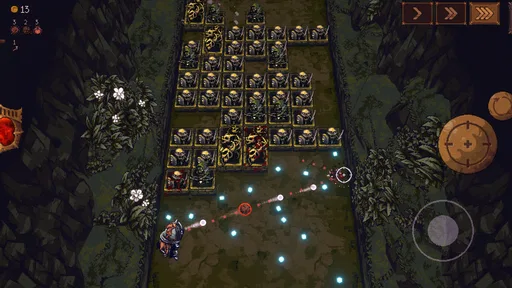
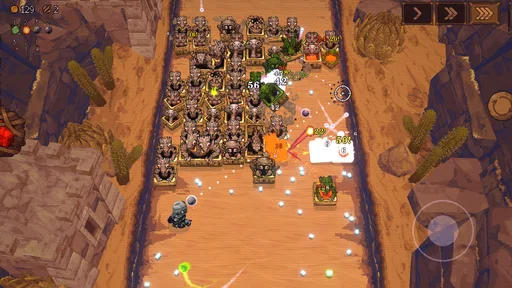
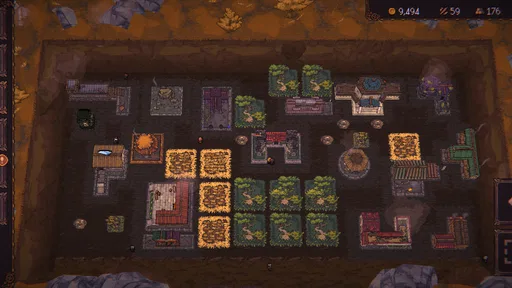
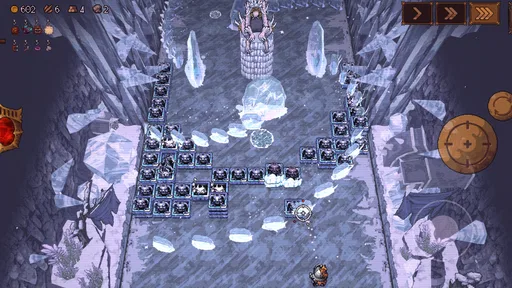
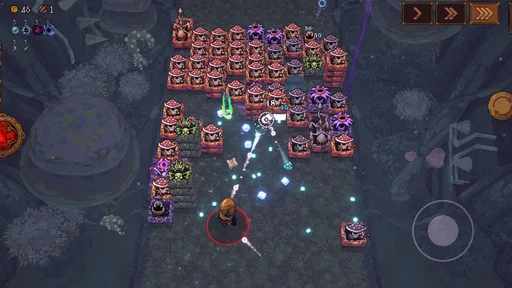
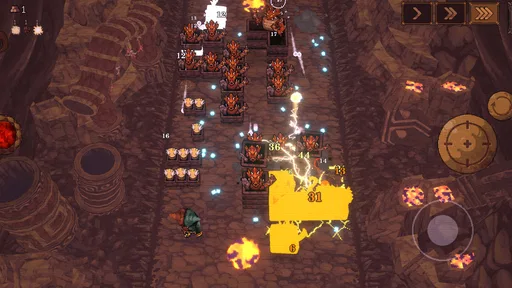
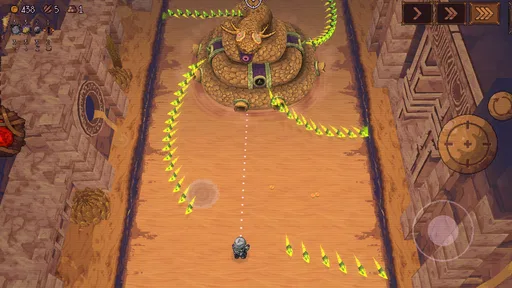
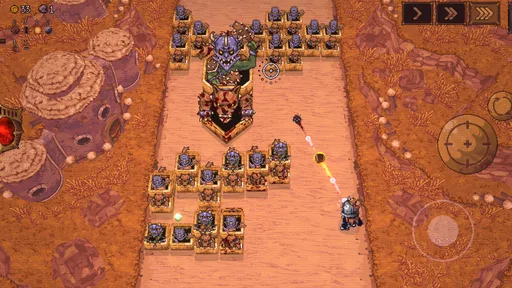
Our Review of BALL x PIT
 Analysis by Appyee
I expected a simple arcade game when I first opened BALL x PIT, but its appeal comes from how quickly a familiar action becomes a series of difficult decisions. The basic idea is easy to understand: you control a stream of bouncing balls, break targets, combine useful balls, and try to survive long enough to improve your position. What kept me playing was not the first few minutes of destruction, but the tension between short-term survival and building something that might help on the next attempt.
This is a free arcade game from DevolverDigital, aimed at players who enjoy runs that can be understood immediately but are hard to optimize. It is listed for a Teen audience, runs on Android versions from 6.0 onward, and its current version is 1.301. The game has already passed one million installs, with an average score of 4.6 from around twelve thousand ratings. Those figures suggest a healthy audience, but they do not answer the more important question: does it still deserve space on your phone after the novelty wears off? My answer is yes, with a few important qualifications.
Why the first week feels so satisfying
The opening sessions are driven by a strong arcade rhythm. You are constantly watching trajectories, reacting to incoming danger, and looking for the moment when a ball combination can turn a bad situation around. The controls are not difficult to grasp, which makes the early learning curve friendly. I could start a run without studying a long explanation, yet I still had plenty to learn about timing, positioning, and which upgrades were worth protecting.
The brick-breaking foundation gives every action immediate feedback. A good shot creates a visible chain of progress, while a poor angle can leave threats untouched and make the next few seconds much harder. That makes each run feel active rather than passive. I was not simply waiting for numbers to increase; I was trying to read the board and make a better decision before the available space disappeared.
The ball-fusing element is where the game separates itself from a conventional brick breaker. Combining balls is not merely a way to make the screen look busier. It changes how I think about a run. A stronger ball may help clear the current wave, but using resources too quickly can leave me without the right tools later. That trade-off gives the arcade action a roguelite layer without burying it under complicated menus.
The base-building side also affects the way I value a failed attempt. Losing does not feel completely empty because the run contributes to a broader sense of progress. I can return with a better understanding of what went wrong, adjust my choices, and try again. This is especially effective during the first week, when every session tends to reveal a new interaction between survival, ball combinations, and longer-term development.
My most useful early tip is to avoid treating every powerful-looking option as an automatic upgrade. During a run, I found it more valuable to think about consistency than spectacle. A choice that helps the next few seconds may be less useful than one that keeps my ball pattern reliable over a longer stretch. When the board becomes crowded, predictable damage and controllable angles are often worth more than an impressive effect that is difficult to use well.
The game also works well in short everyday sessions. I could play a run while waiting for an appointment or during a brief break, because the central loop does not require a large time commitment before it becomes interesting. At the same time, a short session can easily become longer than planned because a failed run encourages one more attempt. That is a strength for players who enjoy arcade repetition, but it is worth noticing if you prefer games with a clearly defined stopping point.
The decisions beneath the bright arcade surface
What impressed me most was the way the game makes planning feel natural. I did not need a spreadsheet to understand that some combinations were more dependable than others. The board itself taught me. If a ball repeatedly entered a poor angle, I learned to value positioning more carefully. If an upgrade looked strong but made the overall pattern awkward, I noticed that weakness quickly.
That feedback creates a useful learning loop. Instead of memorizing a fixed solution, I began recognizing situations: when to preserve a useful ball, when to merge, when to accept a less exciting reward, and when a run was already becoming too unstable to rescue. These are the kinds of lessons that make an arcade roguelite feel deeper than its controls initially suggest.
There is also a nice contrast between the immediate and persistent layers. The bouncing balls demand attention right now, while the base encourages me to think beyond the current screen. If I focus only on the next target, I may waste a valuable opportunity. If I focus only on long-term development, I can lose the run in front of me. The best sessions came when I kept both time scales in mind.
What keeps it useful after the first month
The lasting value depends on whether you enjoy improving through repetition. This is not the kind of arcade game I would recommend to someone looking for a campaign with a fixed ending and a steady sequence of new story scenes. Its motivation comes from refining decisions, discovering better approaches, and seeing how far a run can go. Once the basic surprise fades, the question becomes whether the act of improving is enough to bring you back.
For me, the answer was strongest when I treated each run as a small experiment. Instead of trying to win immediately, I tested one change at a time. I might prioritize a different ball combination, pay closer attention to launch angles, or make a more conservative base decision. This made failures informative. The game became less about hoping for a perfect run and more about collecting practical knowledge from imperfect ones.
The base-building layer helps provide that recurring reason to return. It gives the game a sense of continuity, so a session can feel productive even when the run itself ends badly. However, this also creates a possible weakness: players who prefer purely skill-based arcade games may feel that persistent development softens the clean simplicity of brick breaking. Conversely, players who want a deep management simulator may find the building element lighter than the main action.
That middle ground is important. BALL x PIT is best understood as an arcade game with progression, not as a full strategy-management game that happens to use balls. The action remains the center of attention. The base supports the loop, but it does not replace the need to aim, react, and make decisions during a run.
The game is also a good fit for people who like discovering their own routines. I found that I played more consistently when I gave myself a small objective before starting, such as testing a particular fusion approach or trying to survive through a difficult section without spending resources too quickly. That habit prevents the repetition from becoming mindless. Without a personal objective, the cycle can start to feel like replaying the same opening rather than making progress.
Players wondering whether the game requires a powerful phone should note the broad operating-system compatibility: it supports Android 6.0 and later. That does not guarantee identical performance on every device, but it does make the game accessible to people who are not using a recent handset. The more practical consideration is screen comfort. Because the action depends on reading movement and reacting to crowded situations, a cramped or less responsive display may make the experience less pleasant than it is on a comfortable device.
How it compares with ordinary arcade alternatives
A traditional brick breaker is usually easier to understand and easier to leave. You play a stage, clear it or fail, and move on. BALL x PIT adds more reasons to care about the next decision by combining runs, ball development, and base progress. That makes it more engaging for me, but also less relaxing. There is more to track, and a mistake can feel costly because it affects the shape of the whole attempt.
Compared with a standard roguelite, it is more immediately readable. The game does not ask me to learn a large combat system before the action makes sense. The ball movement provides the foundation, while the fusion and building choices gradually add meaning. This makes it a better choice than many heavier roguelites for a quick break, though players who want elaborate character builds or long-form exploration may find it comparatively focused.
It also differs from idle or automatic progression games. I cannot simply leave the game running and expect the interesting work to happen for me. My attention matters. The strongest results come from understanding the board, choosing a useful direction, and responding when the situation changes. That active requirement is one reason the game feels rewarding, but it also means it is not ideal for someone seeking a background game.
The free entry point makes trying it straightforward, while in-app purchases range from $5.99 to $14.99 per item. I would approach those purchases carefully. The core question is whether you enjoy the loop before spending anything, because no purchase can make the underlying brick-breaking decisions enjoyable if that style of play does not suit you. For me, the game earned its place through the free experience first; that is the standard I would recommend to anyone else.
Where maintenance becomes part of the experience
Every game built around repeated runs needs some personal maintenance, and here that means keeping your approach from becoming automatic. The most effective routine I found was to review the reason for a failed run before immediately starting another. Was the problem a poor angle, an overambitious fusion, a weak reward choice, or simply a failure to react quickly enough? Naming the problem made the next attempt more useful.
This is a small habit, but it changes the game’s long-term feel. Without it, repeated openings can become tiring. With it, even a short session can have a purpose. I also recommend changing only one major decision at a time. If you alter every part of your strategy after a loss, you cannot tell what actually improved the result.
The base can encourage a similar discipline. Rather than choosing an option only because it promises the biggest immediate improvement, I found it better to consider what kind of runs I actually enjoy playing. A development choice that supports a stable, understandable style may be more valuable than one that produces a more dramatic but less controllable screen. This is one of the game’s less obvious trade-offs: progression is not only about becoming stronger, but about shaping the kind of decisions you will face later.
Another useful practice is to stop after a genuinely good run instead of playing until frustration takes over. Because the game makes another attempt easy to begin, it can quietly turn a satisfying session into a string of rushed decisions. Ending while I still felt focused helped preserve the sense that I was choosing to return, rather than being pulled along by unfinished momentum.
The maintenance burden is therefore not technical or administrative in the way it might be in a large online game. It is mostly mental. You need to manage your own attention, expectations, and tolerance for repetition. That is good news for players who like self-directed improvement, but it may frustrate anyone who wants constant novelty delivered automatically.
What may cause fatigue over time
The biggest source of fatigue is repetition at the beginning of a run. Even when the later decisions are interesting, returning to familiar early stages can feel slow if you are eager to test a new idea. This is a common cost of progression-based arcade design: the game needs a recognizable foundation, but that foundation can lose some excitement once you understand it.
A second issue is that the game’s layered systems can make failure feel less clean than in a classic arcade title. In a simple brick breaker, I can usually identify the immediate mistake. Here, the result may reflect several choices made earlier, including how I handled balls, which direction I pursued, and how I developed the base. That depth is valuable, but it can also make a loss feel harder to diagnose.
The fusion system can create decision fatigue when too many possibilities compete for attention. I enjoyed having meaningful choices, yet there were moments when I wanted a clearer answer instead of another calculation about whether to combine, preserve, or redirect my current setup. Players who enjoy experimentation will see this as depth. Players who prefer quick reflexes with minimal planning may see it as friction.
The Teen content rating is another practical signal about the intended tone. I would not choose this as a child-focused arcade game, even though its basic controls are approachable. Adults and older teenagers who enjoy stylized survival pressure are more likely to appreciate the balance between playful presentation and demanding runs.
There is also the question of long-term motivation. If your enjoyment comes mainly from seeing new locations, story beats, or a constantly changing cast of characters, this may not hold your attention indefinitely. Its recurring value is built around mastery and variation within the run structure. That is a durable foundation for the right player, but not a universal one.
I would skip it if I wanted a calm game that could be played with half my attention, a narrative adventure, or a completely predictable level-by-level challenge. I would also skip it if I dislike losing progress and repeating early sections. On the other hand, I would recommend it to someone who likes arcade games but wants more to think about than paddle movement alone, especially if that person enjoys turning failed attempts into better strategies.
My long-term verdict
After the novelty fades, BALL x PIT earns its space through the relationship between immediate control and gradual improvement. The brick-breaking action is accessible, but the ball-fusing and base-building layers give each run enough consequence to support repeated play. I especially value the way the game rewards observation rather than simply demanding faster reactions.
Its weaknesses are closely tied to its strengths. The repeated structure can become tiring, strategic choices can sometimes slow the arcade flow, and the persistent progression will not satisfy players who want either a pure reflex game or a deep management experience. Those are not minor details to overlook. They determine whether the game becomes a regular habit or an app you remove after a few enthusiastic sessions.
For everyday use, I see it working best as a focused break: long enough to complete a meaningful attempt, short enough to fit between other tasks. I would play it when I wanted active concentration without committing to a large adventure. I would not open it when I needed something soothing or when I had no patience for starting over.
DevolverDigital has made a game that understands the appeal of one-more-run design without reducing it to automatic repetition. The free price makes the trial easy, while the optional purchases mean I would still judge the game by its play rather than by its shop. My advice is simple: spend time learning the loop before considering any extra content, and pay attention to whether improving your decisions feels rewarding.
In the end, this is a strong recommendation for players who want an arcade game with a strategic backbone. It does not promise endless novelty, and it should not be treated as a substitute for every other roguelite or brick breaker. But if you enjoy watching a messy run become a controlled one, and if you like building a personal routine around small improvements, this is the kind of free game that can remain useful long after its first impressive session.
Privacy and Permissions
See what permissions an app requests and how it handles your data.
- Photos/Media/Files
- read the contents of your USB storage, modify or delete the contents of your USB storage
- Storage
- read the contents of your USB storage, modify or delete the contents of your USB storage
- Camera
- take pictures and videos
- Microphone
- record audio
- Other
- view network connections, full network access, change your audio settings, run at startup, control vibration, prevent device from sleeping, Google Play license check
Verdict
Strengths of BALL x PIT
- Fast, satisfying runs with simple controls and responsive aiming.
- Many ball combinations create interesting strategies and build variety.
- Short sessions make it easy to play during brief breaks.
- Unlockable upgrades provide a clear sense of progression.
- Colorful visuals and punchy effects make combat feel energetic.
Limitations of BALL x PIT
- Runs can become repetitive once familiar enemy patterns dominate.
- Some upgrades feel noticeably stronger than others, limiting build choices.
- Difficulty spikes may punish players before they fully understand new mechanics.
- The screen can become visually cluttered during intense encounters.
- Progress may feel slow for players who prefer immediate unlocks.
Other Releases by DevolverDigital
View All


Similar Picks in This Category
View All
Subway Surfers
SYBO Games4.6

Stickman Party 234 MiniGames
PlayMax Game Studio4.6

Subway Princess Runner
Ivy4.4

Temple Run
Imangi Studios4.2

Zombie Tsunami
Mobigame SAS4.6

Stack Ball - Crash Platforms
CASUAL AZUR GAMES4.5
Frequently Asked Questions
What is BALL x PIT, and how does its gameplay work?
BALL x PIT is a fast-paced roguelite action game built around bouncing balls, enemy waves, and upgrade combinations. You control a character in an arena, aim attacks at approaching monsters, collect resources, and improve your abilities during each run. The central appeal is experimenting with different ball types and power-ups to create increasingly effective attack builds while trying to survive as long as possible.
Is BALL x PIT free to download and play?
Availability and pricing can vary depending on the platform and region, so it is worth checking the official Google Play Store or Apple App Store listing before downloading. The game may include optional purchases or advertising, depending on the mobile version. I recommend reviewing the store description and in-app purchase section first, especially if the device will be used by children or if you prefer games with no additional spending.
Does BALL x PIT require an internet connection?
The core action in BALL x PIT is designed around individual runs, so it may be possible to play much of the main gameplay without a constant connection. However, online access can still be required for downloading the game, receiving updates, restoring purchases, viewing advertisements, or using platform-related services. Offline behavior may also differ between Android and iOS versions, so check the current store information.
Is BALL x PIT suitable for beginners, and is it difficult?
BALL x PIT is easy to understand at first because its basic objective is straightforward: aim your attacks, defeat enemies, and survive. However, the game becomes challenging quickly as enemy patterns intensify and each run demands better positioning and upgrade choices. Beginners should expect some trial and error. Early defeats are useful because they help you learn attack combinations, movement habits, and which upgrades complement your preferred play style.
What devices are recommended for playing BALL x PIT smoothly?
The exact requirements depend on the version available for your device, but a relatively recent Android phone or iPhone should provide the best experience. Since the screen can become busy with enemies, effects, projectiles, and upgrade activity, older or entry-level devices may experience reduced performance or longer loading times. Before installing, confirm the required operating-system version, available storage, and compatibility information shown in your app store.
Play our best games!


